
| Home
2
Timothy Series
Audio
|
| |
|
| FINISHING WELL 2 TIMOTHY 4:6-8 Series: The Character of a Consistent Christian - Part Eight Pastor Stephen Muncherian April 1, 2007 |
|
Please turn
with me to 2 Timothy 4 - starting
at verse 6. As you’re
turning think with
me about what it means to finish well.
Does anyone
remember who ran against Franklin
Pierce in the 1852 presidential election? Represented
the Whig party? General
Winfield Scott -
beat President Fillmore for the party nomination.
Little
easier: Who
plays tommorrow - NCAA Championship? Florida and
Ohio
State. Question: Who did Michigan State
beat in the first
round of March Madness? Marquette: 61-49.
Unless
there’s some real significance that
stands out in our mind we tend to remember the winners
more than the
losers. True? We
remember those who finish well.
One of the
most prestigious events of the
Olympic Games is the Marathon - 26 miles - 385 yards - a test
of human endurance. In
the 1968 Summer
Olympic Games, held in Mexico City, John Stephen
Akhwari of Tanzania
started with the other runners but fell way behind the
leaders. Have you heard
this?
At the
finish line - the 100,000 plus
spectators packing Olympic Stadium - cheered the
winners of the race. Other
runners entered the stadium and crossed
the finish line to the cheers of the crowd. The
race was over. People started packing up -
getting ready for
other things.
Then, one
lone runner entered the stadium -
John Stephen Akhwari. Akhwari’s
pace was
slow. His steps were
wobbly. His knee was
bloody and bandaged from a fall earlier in
the race. He looked
terrible. As He entered
the stadium and began to slowly complete
that last lap around the track a few spectators began to
realize who he was and what he was doing. As
Akhwari slowly - painfully - crossed the finish line -
they cheered -
saluting the man’s determination.
After the
race, Akhwari was asked - what kept
you going? Why didn’t you
quit? Great
line: Akhwari
said, “My
country did not send me to Mexico City to start the
race. They sent me here
to finish.”
That Akhwari
didn’t win is not as significant
as how he ran the race. He’s
remembered
for his courage and determination - that he persevered
and finished the
course. Take a look at this. What does it say?  Does this help? 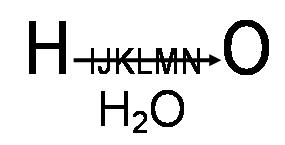 Rev.
Otis Moss - preaching at the funeral of Mrs. Martin
Luther King, Sr., -
the mother of Rev. Martin Luther King, Jr. - Rev. Moss
preached a
sermon about “the little dash between.”
Have you
heard that phrase? He pointed out that
on Mrs. King’s tomb stone there would be her name and
a couple of dates
- when she was born and when she died - and then a
little dash - a line
- in between. Rev. Moss
didn’t talk about
Mrs. King’s birth date or the day she died. He
talked about that little dash - describing Mrs. King’s
life. (1)
How we run -
how we live life - going from
birth to death - is crucial. Running
that
way - through the finish line - is essential. Thinking
about what it takes to do that - the Character of a
Committed Christian
- to remain consistent in our walk with God - to go
the distance with
Jesus - this morning we’re coming to where Paul - as
he’s looking at
the finish line - Paul shares his feelings about how
he’s run the race
and what means to finish the course.
2 Timothy 4 - verse 6: For I am
already being
poured out as a drink offering, and the time of my
departure has come.
Verse 6 is
Paul’s description of how Paul views
his death. Say
that with me, “How
Paul views his death.”
The word for
departure is the Greek word
“analousis.” Think
“loose.” When a ship was
going to set out for sea they would
“analousis” - loosen - its moorings.
The
word was used of soldiers breaking camp - loosening
their tent pegs -
pulling up stakes - getting ready to move on.
Paul is
writing from a stinking - dark - damp
- cold - unsanitary - jail cell - the guest of the
Christian hating nut
case Emperor Nero. He’s
writing - probably
in the late fall. Tradition
tells us that
on an April morning - about 6 months later - about
this time of the
year - Paul was taken out of that cell - taken out to
the Ostian Way -
outside the city of Rome - and beheaded.
The time of
Paul’s loosing has come. Literally
- its really close.
Paul -
viewing the upcoming certainty of his
death - he’s not anxious - thinking that all this is
some disaster -
some unfair cosmic mistake - something to fear. He’s
not whining and talking about all the things he
regrets doing or not
having done.
According to
Old Testament law when as animal
was sacrificed - as an appeal for God’s forgiveness -
a drink offering
- which consisted of about a quart of wine or up to a
half gallon of
wine - depending on what was being sacrificed - a
lamb, a ram, or a
bull - while the animal was burning on the altar - a
drink offering was
prepared and gradually poured out over the animal
being sacrificed. Poured
out until there was nothing left.
It was the final act in the entire sacrificial
ceremony. It was an
offering which was to
be a pleasing aroma before the Lord.
Paul draws
on that image. “I’ve
been poured out.” The time of my being poured
out to God is
coming to an end.
Do you hear
Paul’s heart? “For
me to live is Christ and to die is gain.” (Philippians
1:21) He’s been poured
out. Everything that
could have been given has been given.
There’s nothing left in reserve.
His life has been totally sacrificed to God.
Grab on to
that image - to be poured out to
God is to be ready for death. Say
that
with me, “To
be poured out to God is to be ready for death.”
Going on -
verse 7: I have
fought the good
fight, I have finished the course, I have kept the
faith.
Verse 7 is how
Paul
summarizes his life. Say that with
me, “How Paul summarizes his
life.” He uses three phrases.
First: “I have
fought the good
fight.”
The Greek
words for “fought” and “fight” are
both related - “agonizomai” and “agona.”
“Agona”
is the word we get what from? “Agony.” “I’ve
agonized the good
agony.”
“No pain no… gain.” “Agona” is an athletic term. It talks about the struggle
- the striving - the effort -
the training - the early mornings and late nights of
practice - the
endurance - the all out commitment needed to win. What
it means to keep going when by all reasonable
standards we should quit. Its
agony.
In Ephesians
6 - Paul writes, “Our struggle is not
against flesh and blood, but against the rulers,
against the powers,
against the world forces of this darkness, against the
spiritual forces
of wickedness in the heavenly places.” (Ephesians 6:12) That
doesn’t sound like a Sunday School picnic. That’s
a hard - takes everything we’ve got - agonizing -
lifetime commitment
to perseverance - to being poured out.
Paul -
summarizing his life - Paul writes, “I’ve
done that well. I fought
well.”
Second phrase: “I have
finished the
course.” I finished the race - the
Christian life. To finish
means that there is nothing left to
the course. I didn’t quit
10 yards short
of the finish line. I’ve
turned in my best
performance. I’ve done
everything Jesus
asked of me. I’ve done it
with a right
attitude and I’ve done it well.
Third phrase: “I have
kept the faith.”
The
strongest part of a castle - impenetrable
- impervious to attack - the strongest part of a
castle was a high
towerlike structure with thick walls.
It
as called the “keep.” It
could be defended
even when the rest of the castle was captured or
destroyed.
To “have
kept” means to have guarded - to
have preserved - to have watched over - the faith. As Christians we’re
entrusted with a priceless treasure -
the faith - what we believe and live by - the Gospel
of salvation and
life in Jesus Christ. We
must be committed
to protecting what’s been entrusted to us.
There are
many who are not. Paul
writes in his letters about men like Hymenaeus and
Alexander and Philetus - those and other men that Paul
and Timothy and
the Church struggled with. Who
had dropped
that ball. Who had turned
from their faith
- were leading others away from God.
Throughout
church history there have been men and women - in
leadership - maybe as
close as our family members - who have fallen into
sin. Who have disgraced
the faith. Who
have turned away from God.
Paul writes,
“I got the ball. I
tucked it in - protected it. Satan
and his minions would have loved to have stripped it
from me. But I held on - ran with it all the way
into the end zone.”
Paul
summarizes his life: I
have fought the good fight; I have finished the race;
I have kept the
faith.
Verse 8: In the
future there is
laid up for me the crown of righteousness, which the
Lord, the
righteous Judge, will award to me on that day; and not
only to me, but
also to all who have loved His appearing.
Verse 8 is Paul’s
expectation
for the future. Say that with me, “Paul’s
expectation for
the future.”
There are
four expectations. First: The
Crown of
Righteousness.
Be careful. This
doesn’t mean that Paul is going to be made righteous. God puts us into a right
relationship with Him - makes us
to be righteous - when we put our trust in Jesus as
our Savior. Paul is
writing about what will be awarded to
those who are righteous.
The word for
crown is “stephanos.” A
word I’m very partial to. It’s
the laurel wreath that was awarded to the winner of
the Marathon - placed on the winner’s head.
In 1
Corinthians 9:25 - Paul writes, “Everyone
who competes in
the games exercises self-control in all things. They
then do it to receive a perishable wreath, but we an
imperishable.”
The crown of
righteousness is eternal life -
imperishable - which is awarded to those who have
lived righteous. It
testifies of how that life was lived - the
dash - the character of the one crossing the finish
line.
Second expectation:
That crown is
going to be given to him by Jesus, the righteous Judge.
Do you know
who Jacques Rogge is? Jacques
Rogge is the President of the
International Olympic Committee.
Win the
marathon - step up to the stop platform - Jacques
Rogge comes out -
gives you a perishable gold medal - some girl hands
you a bouquet of
roses and gives you kiss on the cheek..
Paul’s
writing about something way better.
Nero - the unrighteous judge
- knowing full well that Paul is righteous -
innocent of
the charges - is going to award Paul with physical
death - an
undeserved sentence. Jesus
- is going to
reverse that decision by awarding Paul with what is
deserved. Jesus knowing
everything there is to know
about Paul - Jesus having made Paul to be righteous -
will personally
give Paul the crown of righteousness - declaring that
Paul has been
made righteous and is awarded eternal life.
Third expectation:
The crown will be
awarded on “that day.” That day is the
way Scripture refers to the
end - the future day when all of what God is about
doing in history
will be revealed - will reach its climax. When
references to time will no longer have meaning because
we’re going to
enter into eternity. Some
will enter
eternity with God. Some
will enter
eternity without God.
How that
works out in terms of Paul dying
back in 67 AD and “that day” being still in the future
I don’t know. Its like
one of those Star Trek space time
anomalies. Trying to
explain eternity from
a finite perspective - we’re pretty limited. But,
God has all that worked out.
Bottom line: On
the day he is judged - Paul knows what Jesus will
award him with. He’s
going to be with God - forever.
Fourth expectation:
Not only is Paul
going to get a crown of righteousness - but so will
everyone else who
has loved Jesus’ appearing.
Jesus’
appearing - is about two bookends.
The first bookend is the first coming of Jesus
- who through His work here on earth offered salvation
- the reality of
eternal life in the presence of God - offered through
His broken body
and spilled blood. Bookend
two is His
return in judgment - “that day” - when Jesus will
claim His bride - His
people - those who have trusted Him as their Savior -
and dispatch the
unrepentant to hell. (John
5:21-27)
Those who
have loved Jesus’ appearing are
those who have trusted in Him as Savior and who are
waiting with
expectation for His return - for that day - for the
awarding of our
crowns of righteousness.
That’s
amazing. Paul’s
expectation and ours - is that one day all those who
love Jesus are
going to meet Him face to face. We’re
going
to worship Him together - serve Him together - live
forever with
Him. The crud of this
world will be over -
no more tears - no pain - no death.
We’re
going to have bodies that don’t break down. We’re
going live like we can’t even begin to imagine. But,
a kind of life that we deeply long for.
That
is a tremendous expectation isn’t it?
Paul -
looking forward to his death - sees
himself as having been poured out for God. All
that’s been required of Him has been accomplished. There are no regrets. He’s
been faithful with what has been entrusted to him. He has fought the good
fight. His
expectation is eternity with God.
How many of
you have seen the movie
Schindler’s list?
Oskar
Schindler was not much of a businessman.
But in 1941 - Oskar Schindler moved to Krakow
to take advantage of the business opportunities
created by the German
occupation. That move
began the most
successful part of Oskar’s life.
Oskar began
a enamelware factory - produced
mess kits and field kitchenware for the German army. He convinced Jewish business
men - relocated to the Jewish
Krakow ghetto - convinced Jews to front the money for
the factory. He employed
Jews at 7 marks for skilled
laborers - 5 marks for the unskilled and women -
because the Jews were
cheaper than Poles. Schindler
made a
fortune - obscene amounts of money.
Then
Schindler began to see how the Nazi
regime was treating the Jews. So
Schindler
began to employ hundreds of Jews - essential workers
or not - skilled
or otherwise. The factory
became a place
of hope and life.
When the
Germans ordered the Jews relocated
to Auschwitz for “special treatment” - Schindler put
together a list -
the names of over 1,100 Jews - went to Amon Goeth -
the commandant of
the forced labor camp - and bought every single Jew on
that list.
He moved
them to Brinnlitz, Czechoslovakia -
his home town. There - at
his own expense
- he started a factory. A
munitions
factory. Where these Jews
worked in safety.
There’s a
scene in the munitions factory
where Itzhak Stern - Schindler’s manager is talking
with Schindler. Stern
says, “There’s a rumor you’ve
been going around recalibrating the machines… We’ve
received angry complaints from the Armaments Board. Apparently the artillery
shells, tank shells, rocket
casings all of them have failed quality control.”
Schindler
says, “Stern, if this factory
ever produces a shell that can actually be fired I’ll
be very unhappy.”
At the end
of the war - the Jews are about to
be liberated - Schindler who had made an unimaginable
fortune is now
broke. He’s spent every
last Pfennig
buying Jews - running a factory that never made any
money.
The scene
I’d like to show you takes place
outside the munitions factory as Schindler and the
Jews say goodbye.
(Schindler’s
List - reel 2: 43:20-47:00)
Point - Schindler: “I could
have done more.”
So many
people come to the end of their lives
- or at least to the point where they can view their
own death
approaching - and suddenly they realize - looking at
the finish line -
that the dash - the course they’ve run - was empty -
selfish maybe -
but with no legacy of value to leave behind. Angry
- fearful - they begin a futile attempt to relive what
never can be
reclaimed.
Y’adults -
learn now to choose wisely how you
live. You can’t go back.
Are all the
things we surround ourselves with
and convince ourselves are necessities - the things we
spend our money
and time on that we feel we deserve - are they as
important as people
who need to know Jesus? As
Christians -
may we not come to where we can view the end our lives
and find
ourselves weeping because we could have done more -
spent our money
differently - used our time more wisely - been more
sacrificial - more
passionate about the salvation of others.
One question: Are
you being
poured out?
(Concluding
Song: "Faith
of our Fathers")
Benediction...
What does
being poured out have to do with
Palm Sunday? Jesus riding
into Jerusalem
is a familiar scene for us. Pilgrims
-
coming together from all over the Jewish Diaspora are
gathered in
Jerusalem to celebrate the Passover Festival -
commemorating God’s
salvation of His people from Pharaoh - from bondage in
Egypt.
As Jesus
enters, they cry out, “Hosanna to the Son of
David. Blessed is He who
comes in the name
of the Lord. Hosanna in
the highest!” (Matthew
21:9) Throngs of
people celebrating His coming.
By Friday -
Jesus is alone. He’s
mocked - beaten - rejected. Even
His
closest disciples are fearfully keeping their
distance.
Palm Sunday
points to the importance of how
live and the essential of finishing well. Jesus
did. He poured out His
life. The others did not.
As you leave
today - thinking about Palm
Sunday - going the distance - being poured out. Tell
the person next to you, “Let’s
finish well.”
_______________________________
Unless
otherwise indicated, Scripture taken from the New
American Standard Bible®, © 1960, 1962,
1963, 1968, 1971, 1972, 1973, 1975, 1977, 1995 by the
Lockman Foundation. Used by permission. |